Back

From Oven to Dispatch: Streamlining Bakery Distribution with Automated End-of-Line Systems

From Oven to Dispatch: Streamlining Bakery Distribution with Automated End-of-Line Systems

The Distribution Bottleneck Most Bakeries Overlook

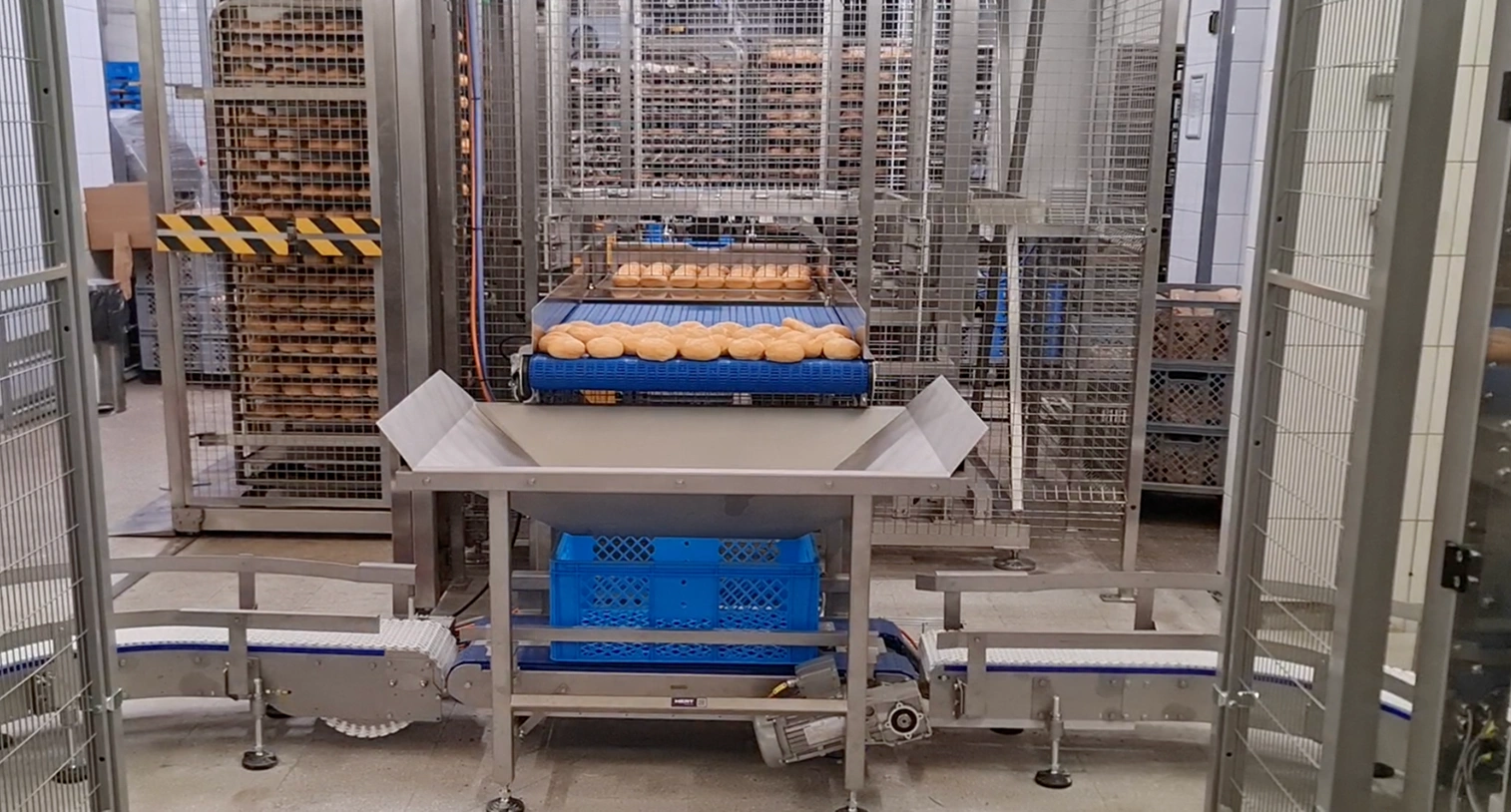
It’s easy to focus investment on mixing, proofing, and baking – the visible heart of production. But when products leave the oven faster than they can be packed and prepared for shipping, the whole line backs up. Manual crate filling and stacking are labor-intensive, inconsistent, and difficult to scale during peak demand.

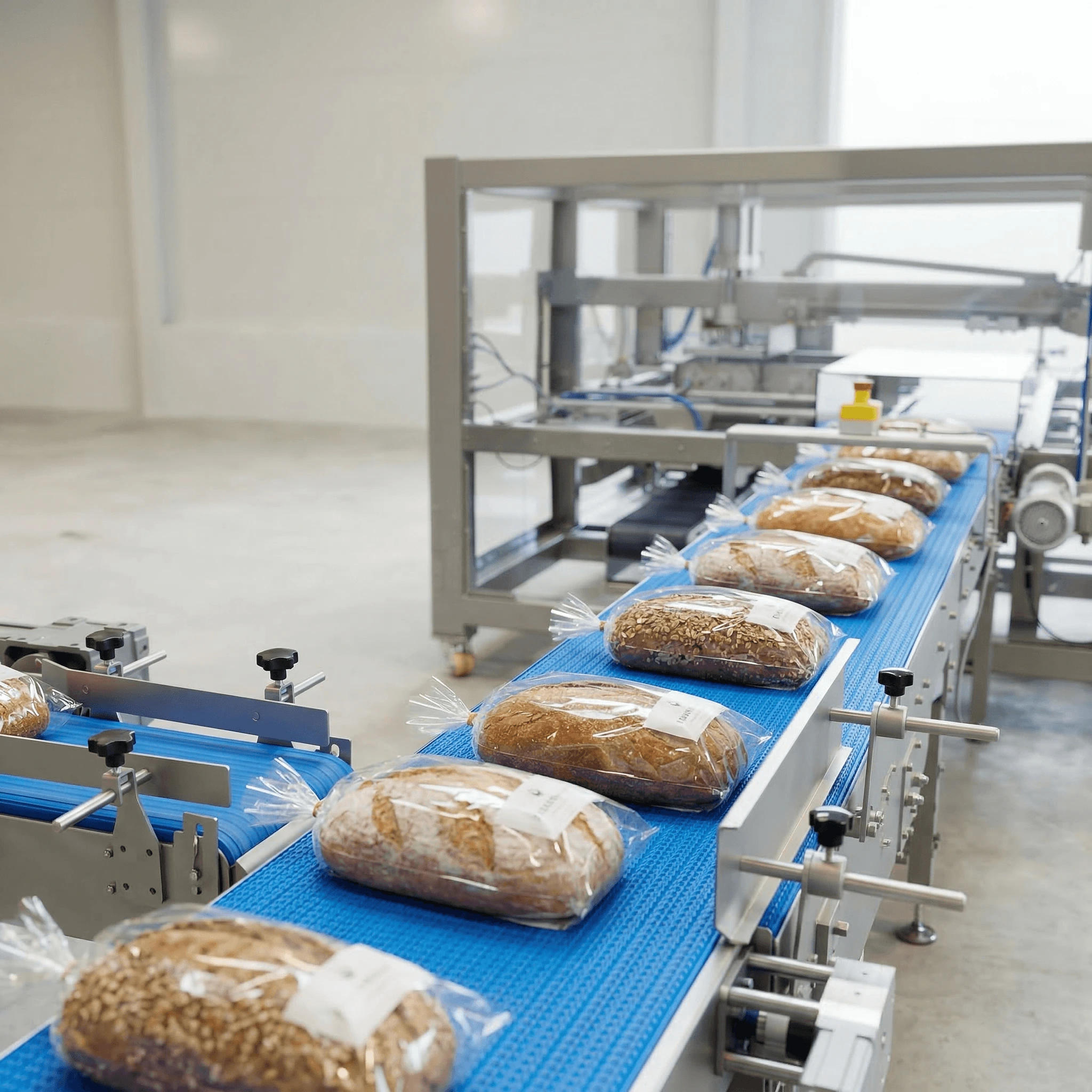
Automating the end of the line removes that constraint. By matching packing and stacking speed to production output, an integrated system ensures that finished goods flow continuously toward dispatch rather than piling up at the packing station. The result is a smoother operation, predictable throughput, and fewer costly slowdowns.

Want to become a sales partner?

If you want to become sales partner please contact us.

Contact us for more information

Consistent Crates Mean Efficient Logistics

Distribution efficiency depends on consistency. When every crate is filled to the same pattern and every stack is built to the same height, downstream logistics become dramatically simpler – pallets load predictably, trucks pack tightly, and warehouse handling is faster and safer.

Automated crate filling delivers precise, repeatable loading patterns tailored to each product, while automated stacking builds stable, uniform stacks ready for transport. This consistency reduces product damage in transit, makes better use of vehicle space, and means warehouse and delivery teams handle standardized loads every time. Small efficiencies at the crate level multiply across thousands of units shipped each day.

Connecting Systems Across Heights and Spaces

Real bakery facilities are rarely simple rectangles. Production lines weave around existing equipment, span multiple heights, and have to make the most of limited floor space. An effective end-of-line system has to connect all of it.

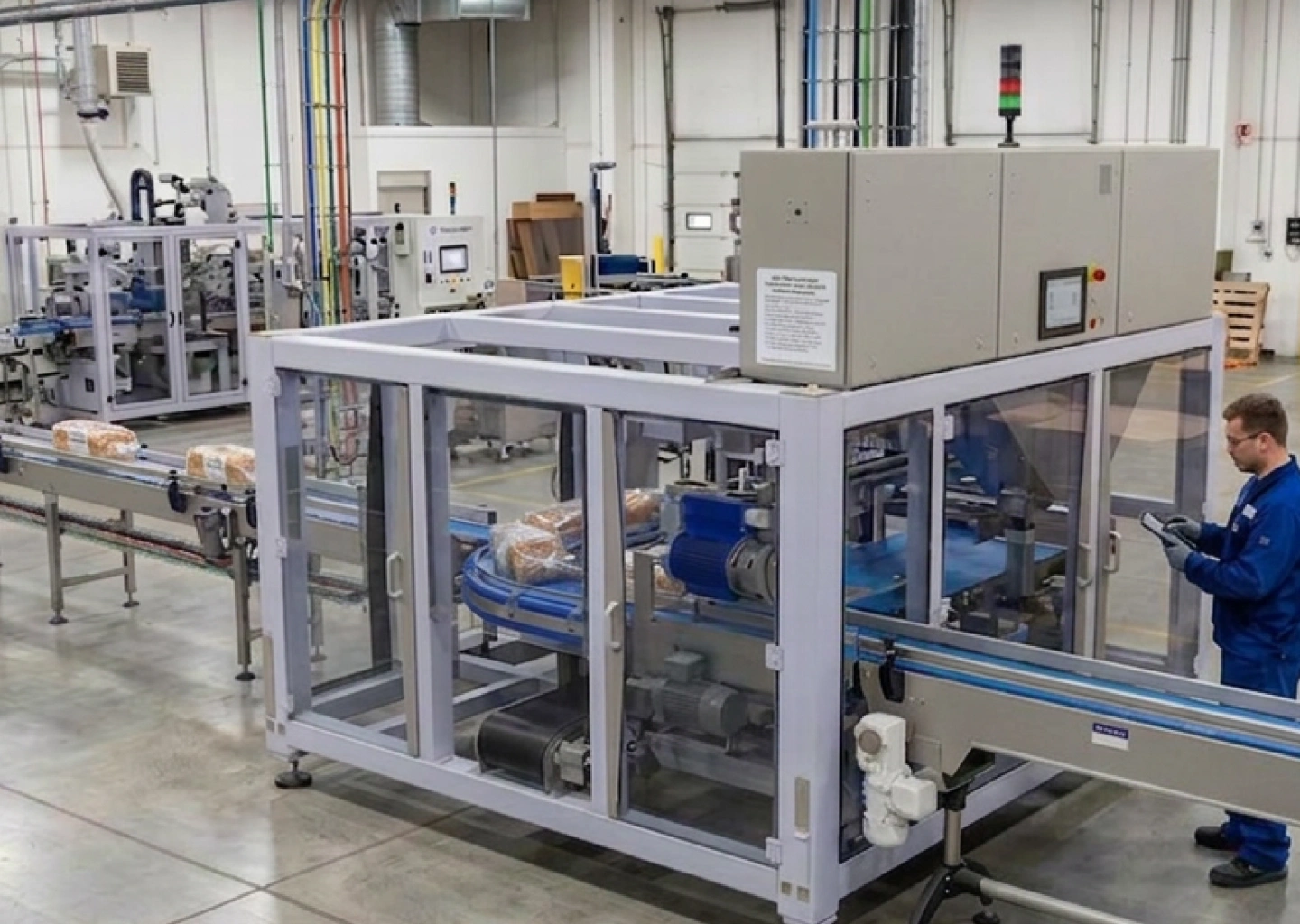
Elevating conveyors act as junctions between systems operating at different heights, while overhead conveyor lines move crates at an elevated level to free up valuable floor space below. Solutions like controlled spiral slides move products between levels smoothly and without impact. Together, these elements route products through the facility in an organized flow – from packing, through buffering and stacking, all the way to the dispatch area – regardless of how the building is laid out.

Buffering for a Smoother Flow

Distribution rarely happens at a perfectly even pace. Trucks arrive in waves, demand spikes around certain hours, and downstream processes occasionally pause. Buffer conveyors absorb these fluctuations, holding stacked crates in the flow so that a temporary slowdown at one stage doesn’t stall the entire line.

Heavy-duty link-chain conveyors are built precisely for this role – handling stacked crates in storage areas and acting as buffers within the production flow. This decoupling of stages keeps the line resilient, so production keeps moving even when dispatch timing varies.

Building a Distribution-Ready Line

The end of the line isn’t an afterthought — it’s the gateway to distribution. By automating crate filling, stacking, conveying, and buffering, a bakery can turn a common bottleneck into a competitive advantage: consistent loads, efficient logistics, and reliable throughput from oven to dispatch.

Looking to streamline the path from production to distribution? Get in touch at hello@endline.eu, and let’s design an end-of-line system that keeps your products moving.